Anaphylaxis: What is it and how can you prevent it
Anaphylaxis is a serious allergic reaction that is sudden in onset and can result in death.
SYMPTOMS: Symptoms of Anaphylaxis can include a cough, hoarse voice, difficulty swallowing or breathing, a swollen tongue, the feeling that your airway is closing up, wheezing and even hives. Below we’ve listed more specific symptoms:
RESPIRATORY: Rhinitis Nasal congestion / drainage / itching / sneezing
Laryngeal edema Difficulty breathing / hoarseness / voice changes “Lump in the throat” / Bronchospasm Cough / shortness of breath / chest tightness
CARDIOVASCULAR: Hypotension (decreased
blood pressure) Lightheadedness / dizziness
“Sense of impending doom”
Arrhythmia Irregular heart beat / fainting
Cardiac arrest Fainting / coma
SKIN: Urticaria (hives) Itching / flushing / Angioedema (swelling) Swelling face, hands, feet, etc.
GASTROINTESTINAL: Bowel wall edema Nausea / vomiting / diarrhea / abdominal cramping
OCULAR: Conjunctivitis Ocular itching / redness / tearing
MISCELLANEOUS Uterine contractions Cramping / Bladder contractions Urgency / loss of control of urine
TRIGGERS: There are many allergens that can trigger this reaction and it is good to be aware of allergens to which you or your family members have severe reactions like: peanuts, shellfish, eggs, stinging insects, strong aeroallergens like perfumes or other scents, etc.
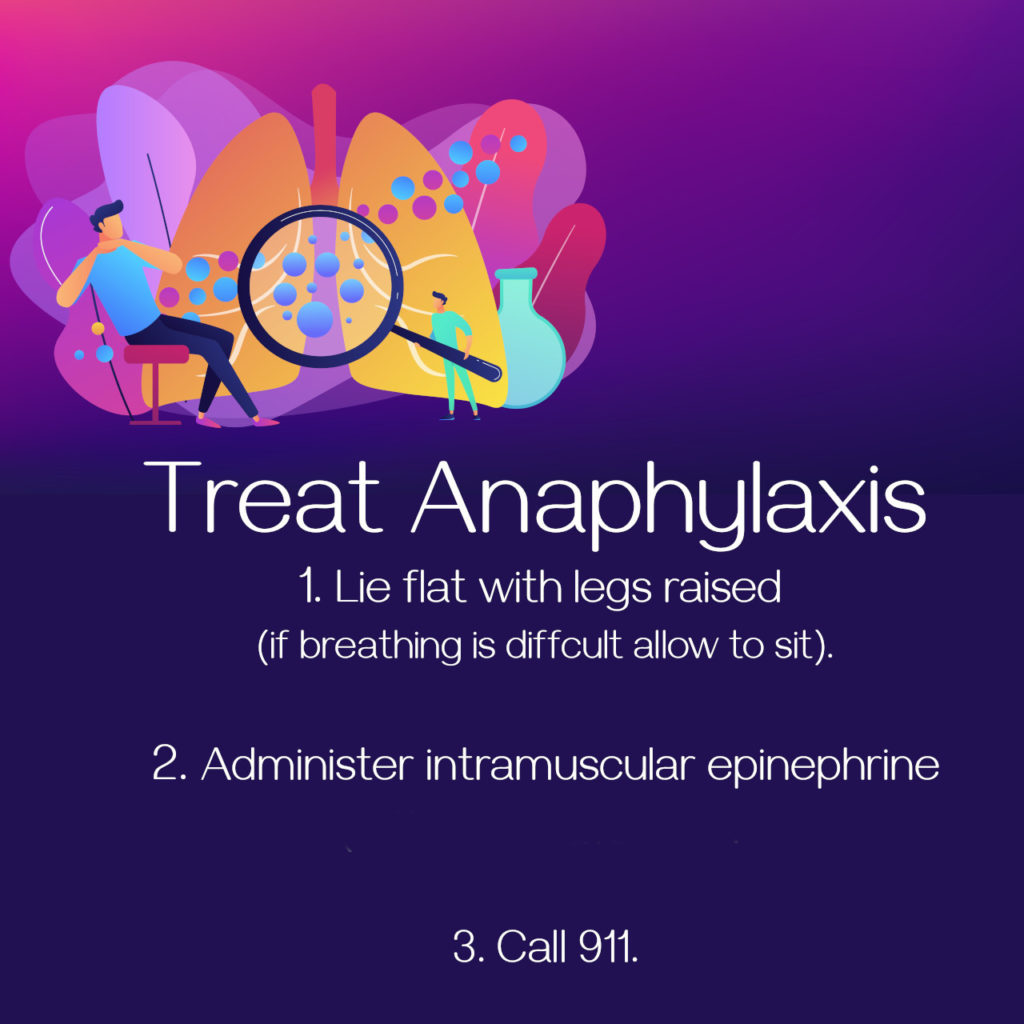
TREATMENT:
Dr. Hallett tells patients that they should consider doing 3 things if they think they are having a serious anaphylactic reaction:(1) Tell someone that something is wrong, so that you have some help.
(2) Take an oral antihistamine. Benadryl should always be available and is quick-acting.
(3) Inject epinephrine and call 911 … or go immediately to the nearest emergency clinic. Do not assume that the epinephrine will work (although it usually will). The benefits of epinephrine wear off quickly (10-15 minutes), so you want to have medical help available if problems return.
Because of the increasing cost of the EpiPen, Dr. Hallett is now prescribing the Auvi-Q, which is the same medication at the same dose … and it is usually covered by insurance (So, no out-of-pocket expense. However, that does not apply to Medicaid or Medicare patients … they still need to get the traditional EpiPen.). The Auvi-Q is also a very cool device, as it talks you through the injection with a little recording that is imbedded in the device! It’s a great alternative to the standard EpiPen. A lot of patients who need to carry an EpiPen will not do so, because of the expense, so the Auvi-Q is an excellent alternative.
To find out more about your allergies and how to handle severe reactions, contact us. We’d love to sit down and discuss your allergies and options with you.